Showing posts with label symptoms. Show all posts

Monday, September 17, 2018

Breast Cancer Symptoms

Check with your doctor if you find any changes in your breast(s) that cause you concern. Changes in your breasts may include:
  • Development of a lump
  • A discharge other than breast milk, especially a bloody discharge
  • Swelling of the breast
  • Skin irritation, such as redness, thickening, or dimpling of the overlying skin
  • Swollen lymph nodes in the armpit
  • Nipple abnormalities (such as pain or redness)

Breast Cancer: Symptoms

symptoms of breast cancer?

Breast cancer often causes no symptoms in its early stages, when it's very small and has not spread. Women with early breast cancer usually don’t have pain or notice any breast changes caused by the cancer. This is why routine screening tests are important. They are often able to detect the disease in its early stages.
As breast cancer grows, it can cause symptoms such as:
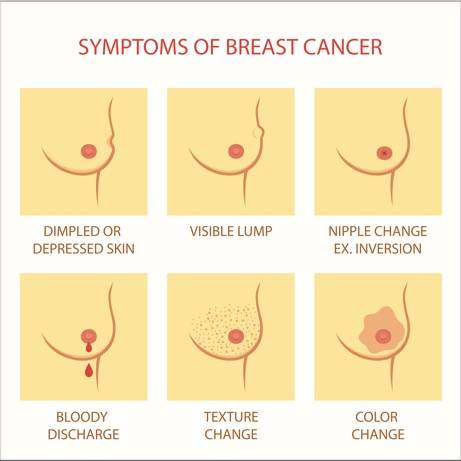
  • A lump, thickening, or swelling in or near your breast or under your arm
  • A change in the size or shape of your breast
  • Nipple discharge that's often bloody and only in one breast
  • Nipple inversion, meaning the nipple pulls back into your breast
  • Nipple or breast pain, tenderness, or aching
  • A change in the look of the skin of your breast, areola, or nipple, such as becoming dimpled or puckered or turning red or purple
  • A change in the feel of the skin of your breast, areola, or nipple, such as turning itchy or scaly

Breast Cancer - Child

Definition of breast cancer:

Cancer that forms in tissues of the breast. The most common type of breast cancer is ductal carcinoma, which begins in the lining of the milk ducts (thin tubes that carry milk from the lobules of the breast to the nipple). Another type of breast cancer is lobular carcinoma, which begins in the lobules (milk glands) of the breast. Invasive breast cancer is breast cancer that has spread from where it began in the breast ducts or lobules to surrounding normal tissue. Breast cancer occurs in both men and women, although male breast cancer is rare.

Breast Cancer

Most breast tumors in children are fibroadenomas, which are benign (not cancer). Rarely, these tumors become large phyllodes tumors (cancer) and begin to grow quickly. If a benign tumor begins to grow quickly, a fine-needle aspiration (FNA) biopsy or an excisional biopsy will be done. The tissues removed during the biopsy will be viewed under a microscope by a pathologist to check for signs of cancer.

Breast cancer is a disease in which malignant (cancer) cells form in the tissues of the breast. Breast cancer may occur in both male and female children.

Breast cancer is the most common cancer among teenage and young adult women aged 15 to 39 years. Breast cancer in this age group is more aggressive and more difficult to treat successfully than in older women. Treatments for younger and older women are similar. Also, care for younger patients with breast cancer includes checking for familial cancer syndromes and considering possible fertility issues when choosing treatment.

Risk Factors, Symptoms, and Diagnostic and Staging Tests

The risk of breast cancer is increased by the following:
  • Having a personal history of cancer that may spread to the breast, such as leukemia, rhabdomyosarcoma, soft tissue sarcoma, or lymphoma.
  • Past treatment for another cancer, such as Hodgkin lymphoma, with radiation therapy to the breast or chest.
Breast cancer may cause any of the following signs and symptoms. Check with your child’s doctor if you see any of the following problems in your child:
  • A lump or thickening in or near the breast or in the underarm area.
  • A change in the size or shape of the breast.
  • A dimple or puckering in the skin of the breast.
  • A nipple turned inward into the breast.
  • Scaly, red, or swollen skin on the breast, nipple, or areola (the dark area of skin that is around the nipple).
  • Dimples in the breast that look like the skin of an orange, called peau d’orange.
Other conditions that are not breast cancer may cause these same symptoms.

Tests to diagnose and stage breast cancer may include the following:
  • Physical exam and history.
  • MRI.
  • Ultrasound.
  • PET scan.
  • Blood chemistry studies.
  • X-ray of the chest.
  • Biopsy.
Another test used to diagnose breast cancer is the mammogram (an x-ray of the breast). When treatment for another cancer included radiation therapy to the breast or chest, it is important to have a mammogram and MRI of the breast to check for breast cancer beginning at age 25, or 10 years after finishing radiation therapy, whichever is later.

Treatment

Treatment of breast cancer in children may include the following:
  • Watchful waiting, for benign tumors.
  • Surgery to remove the tumor, but not the whole breast. Radiation therapy may also be given.

Friday, September 14, 2018

Breast cancer symptoms to look out for

What are some breast cancer signs to be aware of? 

Many women are diagnosed during a routine mammogram without exhibiting any symptoms, according to Dr. Laura Spring, of Massachusetts General Hospital in Boston, Mass.
However, some warning signs include a lump, persistent pain in one area that doesn't go away, and hardening or thickening around the breast and armpit, Spring explained.
“What’s most important is for women to know what’s normal for them and to be aware of changes in the breast,” she said.
Stanford University Medical Center professor Dr. Douglas Blayney said patients may experience bone pain and have weakened bones and fractures if the cancer has already spread.

What else should I know? 

Skin dimpling -- when it “starts looking like a peeled orange” -- is unusual, Dr. Parvin Peddi, an oncologist at UCLA Health, told Fox News.
It “can be a sign of a cancer underneath that is pulling the skin in,” she said.
“Very uncommonly” do women have nipple discharge or blood coming from their nipples, said Dr. Adam Brufsky, a professor at the University of Pittsburgh School of Medicine. However, he added that bloody nipples do not necessarily indicate cancer.
Dr. Margaret Chen, a breast surgeon at NewYork-Presbyterian/Columbia University Medical Center, said that asymmetry and pain are less common symptoms of cancer. She stressed the importance of routine mammograms, given that there are often no warning signs.
Skin redness and feeling warmth in the breast are both rare breast cancer symptoms, according to Spring. She advised women with any questions or concerns to see a doctor.
A new Danish study found that birth control pills that are lower in estrogen, like older pills, were linked to raising the risk of breast cancer, especially with long-term use.
Experts suggested women in their 40s should consider using non-hormonal IUDs, getting their tubes tied or talking with their partners about vasectomy.
About 140 million women use some type of hormonal contraception, including about 16 million in the United States.


Signs and Symptoms of Breast Cancer

For American women, breast cancer is the second most commonly diagnosed cancer after skin cancer. On average, one in eight women will be diagnosed with breast cancer during their lifetime. It’s very important to know what to look for so that you can be the first line of breast cancer detection! The most common sign of breast cancer is a lump or mass. It is usually hard, painless and has uneven edges. Some lumps, however, can be soft and rounded. If you find one we recommend you contact your physician -- a primary care doctor or a gynecologist -- to have the lump evaluated. There’s a chance that it’s not cancerous. Finding out as quickly as possible can ease your mind. And if it’s cancer, can get you on the path to recovery.
There are other warning signs and symptoms of breast cancer which are easily detectable – if you know what to look for. If you notice one or more of these or anything out of the ordinary, you should schedule an appointment soon as possible with your doctor. Other common signs and symptoms of breast cancer include:
  • Warm, red, irritated and/or itchy breasts. These are among the most common early warning signs of inflammatory breast cancer.
  • Nipple discharge. With the exception of breast milk that may leak from breasts during or after pregnancy, any nipple discharge should be checked by a doctor. Clear or bloody discharge may indicate cancer.
  • Flat or inverted nipple. If this is unusual for you, have it evaluated by a doctor.
  • Scaliness. Healthy breast skin is smooth. If yours is scaly or inflamed, that's a red flag.
  • Changes in skin texture. If you develop a rash, puckering or dimpling on the breast, that could be a sign of breast cancer. Skin changes related to breast cancer may resemble the rough skin of an orange peel.
  • Change in breast size or shape. While it's not uncommon for someone to have one breast that's larger than the other, any new change in breast size or shape -- especially in just one breast -- could indicate cancer.
  • Lump or swelling around breast, collarbone, or armpit. Swelling or lumps in the areas surrounding your breasts can be caused by breast cancer that has spread to lymph nodes. This may be seen before you can feel a lump in your breast.

What's Normal?

Knowing the breast cancer red flags to watch for is important, but so is knowing about breast changes that may be completely normal. Throughout a woman's menstrual cycle, periodic breast pain, tenderness, and heaviness are common. If you experience these feelings in both breasts and are menstruating or about to begin your cycle, these symptoms are most likely the result of normal, monthly hormonal changes in your body.

When to Get Checked for Breast Cancer

If you're experiencing any of the symptoms mentioned above, or if you're having pain at times other than the start of your menstrual cycle, it would be a good idea to talk to your doctor about getting a mammogram. Schedule an appointment with your gynecologist, who will typically examine you and then refer you for a mammogram. The American Cancer Society advises women ages 40 to 44 should have the choice to start annual breast cancer screening with mammograms if they wish to do so. Women age 45 to 54 should get mammograms every year. Women 55 and older should switch to mammograms every 2 years or can continue yearly screening.
Mammograms effectively detect 84% of breast cancers; so when you're given a clean bill of health you can set your mind at ease. If your mammogram detects a suspicious mass, you can be evaluated further. If you do have breast cancer, you can expect a better outcome, because the earlier cancer treatment begins, the better the patient outcomes usually are.

Five Common Sign & Symptoms of Breast Cancer

Breast cancer is a cancer that originates in the area of the breast, where cells replicate too quickly, causing a tumor. Breast cancer is most common in women, but I can also occur in men. Breast cancer is caused by an abnormality that is genetic, but only a very low percentage of such cancers are inherited from the mother or father. It is crucial that breast cancer is caught in its early stages for the best possible prognosis, which is why women over 40 are encouraged to have an annual mammogram. Let’s learn about some of the early warning signs related to breast cancer. 1. Skin Changes with the Breast
Many people may experience subtle or very noticeable changes with the actual skin and appearance of the breast, when they are suffering from many different forms of breast cancer, and it can typically be one of the earliest signs of this type of cancer. The skin may begin to feel itchy, or the patient may experience a tingling sensation across the skin of the breast, along with a redness in color. With inflammatory breast cancer, swelling and a dimpled look to the skin may also occur, due to the blockage of the lymph nodes that may be caused by a tumor or a growth.
2. Lump in the Breast
Of course, the symptom that most people hear about the most is to find a lump or a growth in the breast. This lump may be very small and soft, or it can feel like a hard knot in the tissue of the breast. However, sometimes lumps cannot be felt until cancer has developed into its later stages, which is why it is so important for women over 40 to have regular mammograms. Sometimes small growths can show up in a mammogram, when they are not large enough to be detected by a self-check for lumps in the breast.
3. Swelling
In the early stages of this form of cancer, the breast may look completely normal, even though it has cancerous cells, which is why early detection of breast cancer is so very important for the success of its treatment. As cancer progresses, the breast may begin to swell. The arm on the same side of the body may also be affected by swelling, along with under the arm and the area of the armpit. When the lymph nodes that are located under the arm are cancerous, they begin to swell up, blocking fluids and altering the way that they flow throughout the body, causing the swelling in many different areas.
Learn More at Cancer Connect Breast Cancer Information Center
4. Discharge from the Nipple
During any of the stages of breast cancer, any form of discharge from the nipple can definitely be a warning sign. Nipple discharge is any type of fluid that comes from the nipple, and it can include several different forms. The discharge may be yellow and seem to resemble pus, and it can be very liquid, or it can be thicker in form. The discharge may also take on the color of blood, and it can typically be clear with pockets of blood seeming to “float” in what appears to be a type of mucus. This discharge may or may not be accompanied with pain from the area of secretion.
5. Pain
When a person is suffering from any of the stages of breast cancer, experiencing pain in the breast can generally be a warning sign that should suggest that the patient makes an appointment with a medical professional as soon as possible. As the tumor inside of the breast grows, the pain typically increases, as more and more pressure is placed upon different areas within the chest. When the tumor reaches the skin, it can also cause very painful ulcers and skin abrasions. If the cancer spreads into the ribs, it can cause extreme pain. 
Current Breast Cancer Screening & Early Detection Guidelines
Age 30
  • Women should be aware of the look and feel of their breasts and report any changes to a care provider as soon as possible. Breast self-exams may help women become familiar with their breasts but are not recommended as a screening tool.
Age 40
  • Women at average risk should have annual mammograms and continuing for as long as the woman is in good health. Recommendations are undergoing a bit of controversy right now-make sure you discuss with your doctor.


Symptoms of breast cancer

In most cases it is not possible to say what causes normal breast tissue to behave in this abnormal way. It is presumed that a number of different factors such as biological/genetic predisposition and environmental parameters (such as lifestyle and environmental influences) combine to cause the disease to develop. Breast cancer does not usually cause pain or any other typical symptoms.

The following may be signs of breast cancer and must therefore be investigated in more detail:

  • New, hard lumps in the breast
  • Dimpling of the breast or retraction of the nipple
  • Recent change in the size of the breasts
  • Initial signs of nipple inversion
  • Inflammation or reddening of the nipple in women not currently breastfeeding
  • Discharge of liquid from the nipple (particularly if bloody)

Enlarged lymph glands in the armpits

Do not be alarmed if you notice one of more of these symptoms. There is no reason to presume that you have breast cancer. However, it is still advisable to see a doctor without delay, as early recognition of breast cancer greatly increases the chances of successful treatment.

Individuals at increased risk

Breast cancer occurs more frequently in some families and at an early age, and sometimes together with ovarian cancer or breast cancer in men. If a genetic test indicates that the tendency toward this disease is inherited, it is known as genetic or hereditary breast cancer. These families are referred to as high-risk families. They are carriers of abnormal BRCA1 or BRCA2 genes. A precautionary mastectomy with immediate breast reconstruction is recommended in these cases. We can advise you on this and help you identify whether you have an increased risk, and what measures would be beneficial in your case.

Symptoms of breast cancer and reducing your risk

Be breast aware

Being breast aware is about knowing what your breasts look and feel like. Checking them regularly can help you dete​ct when something changes.​ 
Any c​hanges may be h​armless, but you should get them checked by your GP straightaway. ​
Things you should ​look out for are:
  • any lumps, thickening or bumpy areas in your breast or armpit
  • changes in appearance or shape of your breast​, like puckered or dimpled skin​​
  • discomfort or pain that's unusual​​, particularly if it is new and persistent​
  • ​changes to your nipple like dis​​charge, a rash, red areas that won’t heal, or a change in your nipple position (pointing differently or pulled in).
You can develop breast cancer at any time. F​or women of screening age, this can include​ the time in between breast screening appointments. 
If you notice any changes in your breasts that are not normal for you, speak to your GP straightaway.

​How to reduce your risk

Breast cancer is not a preventable disease. However, you can help lo​wer your risk of breast cancer in the following ways:
  • register for breast scree​ning when you reach 50 and regularly attend your breast ​screening appointments​​ if you're aged between 50 to 69
  • be breast aware – check your breasts regularly
  • maintain a healthy wei​ght - increased body weight and weight gain as an adult are linked with a higher risk of breast cancer after menopause
  • exercise regularly - studies have shown that regular exercise can reduce your risk of developing breast cancer by as much as a third
  • reduce the amount of alcohol you drink - even low levels of alcohol intake have been linked with an increase in risk
  • stopping smoking - smokers are at increased risk of breast cancer, along with many other types of cancer
  • breastfeed your babie​s, where possible - studies have shown that women who breastfeed are less likely to develop breast cancer than those who don't
  • talk to your GP if you think you have a family history of breast cancer

Signs and Symptoms

Looking Out for Breast Changes

As well as having your screening mammogram every two years, it’s important you regularly check your breasts for any changes.
You’ll need to ‘get to know’ the normal look and feel of your breasts, so that you can identify an unusual change. To check for changes, look at and feel your breasts regularly. Here are the signs to watch out for:

Breast Awareness Graphic

If you’re aged 50-74, you should still have your regular screening mammogram in addition to checking your breasts - even if you feel ok and don’t have any symptoms.

What if I notice a change?

If you notice any unusual breast change, you should see your doctor immediately, rather than visit BreastScreen NSW.
It’s important that any changes are checked properly by a health professional, which may include a physical breast examination, x-rays and ultrasound imaging of your breast(s).

1 in 6 Women Diagnosed With Breast Cancer Have a Symptom Other Than a Lump

Around one in six women (17%) diagnosed with breast cancer go to their doctor with a symptom other than a lump—the most commonly reported breast cancer symptom—according to new research presented by Koo et al at the 2016 National Cancer Research Institute (NCRI) Cancer Conference in Liverpool, United Kingdom.
Breast symptoms, other than a breast lump, that may be a sign of cancer (termed “nonlump” in the study) include nipple abnormalities, breast pain, skin abnormalities, ulceration, shape abnormalities, and an infected or inflamed breast.
Findings
The research used data from the 2009/10 National Audit of Cancer Diagnosis in Primary Care.
Researchers from University College London (UCL) examined the data of more than 2,300 women diagnosed with breast cancer in England in 2009/2010.
They found that, although most women with breast cancer sought help quickly, those with nonlump symptoms were more likely to delay going to their doctor compared with women with a breast lump alone. Women with both a breast lump and nonlump symptoms were also more likely to delay seeking help. Women presenting with breast ulceration, nipple abnormalities, breast infection or inflammation, swollen arm or armpit, and pain in the armpit were more likely to wait longer than 3 months to seek help.
Monica Koo, PhD student, the presenting author based at UCL, said, “Our research shows around one in six women diagnosed with breast cancer have symptoms other than a breast lump. These women are more likely to delay going to the doctor compared to women with breast lump alone.”
“It's crucial that women are aware that a lump is not the only symptom of breast cancer. If they are worried about any breast symptoms, the best thing to do is to get it checked by a doctor as soon as possible. Diagnosing cancer earlier really is key in order to increase the chances of survival. Symptom awareness campaigns such as the Be Clear on Cancer campaign should continue to emphasize breast symptoms other than breast lump.”
Karen Kennedy, PhD, Director of the NCRI, said, “This research shows that, all too often, women are delaying going to their doctor with symptoms of breast cancer. This could be because people are simply unaware that breast cancer can present in many different ways, not just through the presence of a lump. With a disease like breast cancer, it's essential to be diagnosed as early as possible so that a treatment plan can be developed and started. Awareness campaigns need to raise awareness of all of the potential symptoms of breast cancer so that people know how to spot the signs and when to go to a doctor.”

Thursday, September 13, 2018

Breast Cancer: Symptoms, Complications, and Treatment


In this article we will look at:
  • What is breast cancer?
  • How does breast cancer occur?
  • Who is prone to breast cancer?
  • What are the symptoms of breast cancer?
  • How is breast cancer diagnosed?
  • What are the complications of breast cancer?
  • What is the treatment for breast cancer?
You can click on any of the links above to navigate to the section of your interest.

What is breast cancer?

Breast cancer is the most common form of cancer amongst women in India. It occurs very rarely in men.

Breast cancer accounts for 16% of all female cancers and 22.9% of invasive cancers in women. It is responsible for 18.2% of all cancer deaths worldwide, both male and female.

Regular breast examination is very necessary to detect any abnormality right at the outset.
If you detect any abnormalities during a self-examination of your breasts you need to contact your family physician or a general physician without delay.

Depending on the results of further examination, your doctor may refer you to an oncologist.

How does breast cancer occur?


The cancerous tumour starts from one abnormal cell, usually in the inner lining of the milk ducts or lobules in the breast. If it is diagnosed when the cancerous cells are still within the duct or lobule, it is known as Ductal Carcinoma In Situ (DCIS), which is the most common type of non-invasive breast cancer. One in five new breast cancer cases is DCIS. A carcinoma in situ is easier to treat.

Unfortunately, most breast cancers are diagnosed when the tumour has spread from within a duct into the surrounding breast tissue. This is known as invasive breast cancer.Invasive breast cancer is further divided into:
  • One where cancer cells have invaded the lymphatic vessels
  • One where the cancer cells have not yet invaded the lymphatic vessels
If the cancer cells have moved into your lymph nodes there is a chance that they have spread to other areas of your body including, organs. Removing one or two lymph nodes, through surgery, is required to find out whether the cancer has spread.

Who is prone to breast cancer?

You’re at a risk of developing breast cancer if you:
  • are a woman older than 50 years
  • have already had cancer in one breast
  • have a family history of breast cancer
  • have inherited certain gene mutations (such as BRCA1 and BRCA2 - which account for 5% - 10 % of breast cancer cases). This has been much in the news of late and has also been nicknamed as the “Jolie effect” after Angelina Jolie, the Hollywood actress who highlighted how genetic testing can prevent breast cancer.
  • have been exposed to chest radiation for any treatment during your childhood years, or before menopause
  • began menstruating before 12 years of age
  • had your first child after the age of 29 years, or if you do not have a child at all. The opposite is true if you have a family history of breast cancer.  Meaning if you have a family history of breast cancer your risk will be minimized if your first child is born after 29 years or if you do not have any child at all.
  • undergo menopause after the age of 54 years
  • have a higher breast density

What are the symptoms of breast cancer? How is breast cancer diagnosed?


The vital symptoms of breast cancer include:
  • A painless lump in the breast, near the collarbone, or under the arm ( however, not all lumps are cancerous, some are benign)
  • Nipple tenderness or changes in the shape of the nipple, such as an inverted nipple
  • Breast pain which does not go away after your next period
  • Skin of the breast, nipple, or areola suddenly becoming tender, or itchy, or scaly, or sore, or red
  • Sudden asymmetry of breasts such as sudden swelling of a breast, or sudden shrinking of a breast
  • Nipple discharge from one of the breasts which can be clear or bloody

Diagnosis

After asking you about your symptoms, the doctor will thoroughly examine your breasts for any lumps, or any changes in the skin texture, and changes in the nipples.
If the symptoms are found to be positive the doctor will suggest imaging tests to find out what is going on inside your body, such as:
  • Mammograms: which is an x-ray of the breast and helps to detect any abnormalities in the breast.
  • Breast Ultrasound: is often used to check any abnormal results of a mammogram. An ultrasound reveals whether the breast lump is filled with fluid ( cyst) or it is a solid lump.
  • Biopsies: wherein, tissues are removed from the suspicious area, and are examined under a microscope. The tissue is further tested to find out if it is cancerous.
  • Magnetic resonance imaging (MRI): is a procedure in which large magnets and radio frequencies are used to search for cancer. MRI does not use X - rays so, there is no radiation exposure. This captures multiple images of breast tissue n the inside.
  • Ductogram: is used to identify the cause of nipple discharge.
  • Magnetic resonance imaging (MRI): is a

What are the complications of breast cancer?

Breast cancer surgery, though considered safe, may give rise to a number of complications.
Psychological complications include:
  • fear
  • anxiety
  • loss of sleep
  • loss of sexual interest
  • depression due to possible physical changes resulting from the intensive treatments
Secondary physical issues may crop up such as :
  • inflamed lung tissue
  • heart damage
  • secondary cancers
Some complications that may occur after the surgery include:
  • hematoma or buildup of blood under your skin
  • seroma or buildup of fluid on the site of the surgery
  • lymphedema or swelling of the arm on the side of the surgery
  • reactions to the anesthesia
Chemotherapy is used to treat various stages of breast cancer. It may give rise to complications, such as:
  • low immunity 7-14 days after undergoing chemotherapy and thus prone to infections
  • hair loss and thinning due to chemotherapy
  • nausea and vomiting episodes after chemotherapy
  • constipation or diarrhoea
  • dental and mouth problems, such as sore gums, mouth ulcers
  • dry skin and brittle  nails
  • constant exhaustion
  • infertility
  • early menopause
  • menopausal symptoms (hot flashes and vaginal symptoms)

What is the treatment for breast cancer?

 Medical treatments
Depending on the type and stage of your breast cancer, there are several ways to treat it such as:
  • Surgery
  • Radiation therapy
  • Chemotherapy
  • Hormone therapy
  • Targeted therapy
 Treatments for all the patients can be a mix of these different types, based on the stage of cancer.

Exercise

Research shows exercise is safe during and after cancer treatment. It can strengthen your physical body. And the stronger you are before surgery, the quicker you can recover from it.
Before you decide to start on an exercise regimen, it will be wise to consult with your doctor and find out what kind of exercises suit you the most.
You may need the help of a physical therapist if you have never exercised before.

Symptoms of breast cancer


Breast cancer may not cause any signs or symptoms in its early stages. Signs and symptoms often appear when the tumour grows large enough to be felt as a lump in the breast or when the cancer spreads to surrounding tissues and organs. Other health conditions can cause the same symptoms as breast cancer.

The most common symptom of ductal carcinoma is a firm or hard lump that feels very different from the rest of the breast. It may feel like it is attached to the skin or the surrounding breast tissue. The lump doesn’t get smaller or come and go with your period. It may be tender, but it’s usually not painful. (Pain is more often a symptom of a non-cancerous condition).

Lobular carcinoma often does not form a lump. It feels more like the tissue in the breast is getting thicker or harder.

Other symptoms of ductal and lobular breast cancer include:
  • a lump in the armpit (called the axilla)
  • changes in the shape or size of the breast
  • changes to the nipple, such as a nipple that suddenly starts to point inward (called an inverted nipple)
  • discharge that comes out of the nipple without squeezing it or that has blood in it
Late signs and symptoms occur as the cancer grows larger or spreads to other parts of the body, including other organs. Late symptoms of breast cancer include:
  • bone pain
  • weight loss
  • nausea
  • loss of appetite
  • jaundice
  • shortness of breath
  • cough
  • headache
  • double vision
  • muscle weakness

The first sign of breast cancer isn’t always a lump


While many may book in with their local GP after finding a lump in their breast, a new study is urging woman everywhere to keep an eye out for a few other unsuspecting symptoms.
The research, conducted by University College London, has found that one in six women (17 per cent) diagnosed with breast cancer first seek consultation after experiencing health indicators other than a breast lump.

What are the signs and symptoms of breast cancer?
 
Besides a breast lump, which 83 per cent of diagnosed women brought to their doctors, women should also seek professional advice for:
  • Nipple abnormalities including redness, crusting or clear/bloody discharge (seven per cent)
  • Breast pain or discomfort (six per cent)
  • Breast skin abnormalities (two per cent)
  • Breast ulcerations (one per cent)
  • Swelling or lump in the armpit (one per cent)
  • Back or muscular pain (one per cent)
  • Breathlessness (less than one per cent)
  • Changes to the contour or shape of the breast (less than one per cent)
While this study was carried out in the UK, in Australia alone, one in eight women will be diagnosed with breast cancer in their lifetime, with eight women losing their battle to the illness each day. It is the most common form of cancer among women. 

Early detection is vital and can save lives. If you’re experiencing any of the above symptoms, wish to find out more, or want to book in for a check-up, visit your local GP today.

Lesser-Known Symptoms of Breast Cancer

Breast cancer. What do you think of first when you hear those words? Do you immediately think of death? Does your mind instantly conjure up pictures of bald, gaunt women in the midst of chemotherapy treatment? Or do you see yourself in the mirror wondering if you might possibly be the next person to receive a diagnosis? You may not have pictured any of these scenarios; instead, you may have immediately thought about the discovery of a palpable lump in breast tissue. And while breast lumps are very common warning signs of possible cancer, they are not the only ones.

There are several less-known warning signs of a possibility of breast disease. In this post, my desire is to bring awareness to lesser-known symptoms in hopes of helping save someone's life. When it comes to breast cancer awareness, knowledge is power and the more we know, the better prepared we can be for the future.

Before we begin talking about the signs and symptoms of breast cancer, may I ask you a question? How well do you know your breasts? That's an embarrassing question for some, but it's an important one. Do you ever take time to really look at your breasts? If you haven't scrutinized them before, it's time you do.

When you have the opportunity, stand in front of a large mirror. Remove your blouse and bra. Look at yourself from the neck down. As you view your chest area, look at the size of your breasts. They may or may not be symmetrical and that's OK. Many women are born with one breast slightly larger or smaller than the other. The important thing is to really pay attention to how your breasts look.

While viewing your breasts, look at them in a scientific manner. Do you notice any immediate areas of concern? If so, make a mental note of the area. You may even want to take a digital picture. Next, turn your body to the side. View your breasts individually from each side. Once again, look for any areas of concern. After completing the visual inspection of your breasts, now would be a good time to do a breast self-exam. If you've never done one before, they are fairly easy to do. Here are step by step instructions.

Now, let's discuss the less common signs that could indicate a possibility of breast cancer. One of the first and most commonly overlooked signs is a slight puckering of the breast. The puckering may be very slight. It might not be visible unless you lift your arms and look at your breasts in the mirror with arms raised. If you notice any puckering, no matter how slight, you need to see your doctor and have this area checked. The puckering may be near the nipple, along the sides of your breasts, or anywhere along your breast tissue. As a tumor in the breast begins to grow, it can sometimes disrupt the architecture of the skin and cause a pulling of tissues and ligaments. Puckering may be so slight it only looks like a mild indentation and it may resolve after you've moved your arms back into a normal position.

Along with puckering, another possible sign of breast cancer is breast dimpling. Dimpling is a type of condition that resembles the skin of an orange. There may be slight pitting or dimples along the breast tissue. If you notice any such areas, please have them checked as soon as possible.

Another less common sign of possible breast cancer involves the nipple. This symptom is more noticeable and more commonly shared with a medical professional. This sign involves discharge. Any discharge that comes from the nipple on its own should be reported to a doctor, especially if it is tinged with blood. Nipple discharges that come from the nipple upon squeezing, do not usually indicate breast cancer. In fact, a slightly cloudy fluid may be normal colostrum in women who are pregnant or about to begin nursing.

Changes in the color of the nipple or areola should also be reported to your doctor. Sometimes a flaking or irritation of the nipple can signal a problem. If your nipple has changed in appearance, pay particular attention. Breast cancer can invade nipple tissue causing variations in texture, appearance, or color. An inverting (turning inward) of the nipple could also signal a problem.

Another less known sign of breast cancer can be breast pain. If you notice a particular area of your breast that hurts, like a deep, inner throbbing, have your doctor evaluate it as soon as possible. A growing tumor can cause breast tissue pain.

Red spots on the skin of the breast can also be warning signs of a problem. Although this sign is often disregarded, it can be a very subtle warning signal of a very dangerous type of breast cancer. Red areas on the breast tissue can warn of inflammatory breast cancer. This type of cancer is rare, but needs to be evaluated quickly. If your breast becomes warm, red, swollen, or if you notice your breast tissues has thickened, please get checked. You may only have a type of breast infection but it's always better to be safe than sorry.

Now that you know some of the lesser known symptoms of breast cancer, please be sure and check your breasts on a regular basis. Perhaps you'd like to put a reminder in your phone calendar or find some other way to help you remember to check yourself. There are even websites you can sign up for that will send you free reminders, Check Your Boobies is one such organization. Along with these symptoms, please remember, in your exams, to pay particular attention to any lumps, masses or areas of hard tissue you come across. Also, make sure to have regular mammograms or other diagnostic tests. While these tests are vitally important, the majority of breast cancers are found by women who are diligent to check their bodies. It's our responsibility to do what we can to protect ourselves.

In the event you notice any of the symptoms described in this article, don't instantly become fearful and assume you have breast cancer but do see a doctor as soon as possible. Early detection can often prevent more serious problems later.

Symptoms

The first symptom of breast cancer most people notice is a lump in their breast or some thickening.

Breast lump

The first symptom of breast cancer for many women is a lump in their breast. But 9 out of 10 breast lumps (90%) are benign. That means they are not cancers.
But if you spot a lump, see your doctor straight away.

Change in size, shape or feel of a breast

Your breast might look bigger or have a different shape than usual. It might feel different. Many healthy women find that their breasts feel lumpy and tender before their period.
Get to know the size, shape and feel of your breasts. See your doctor if you notice any changes or anything that is unusual for you.

Breast pain

Breast pain is very common and it’s not normally due to cancer. You might get pain in one or both breasts for a while, which goes after a time. There might be no obvious reason for this pain, even if you have a lot of tests.
See your doctor if you have breast pain.

Skin changes

Skin changes include puckering, dimpling, a rash, or redness of the skin of the breast.
The skin might look like orange peel or the texture might feel different. This can be caused by other breast conditions but get your doctor to check out anything that is not normal for you.

Change in the position of your nipple

One nipple might turn in or sink into the breast. It might look or feel different to usual.

Fluid leaking from your nipple

Fluid leaking from a nipple in a woman who isn't pregnant or breast feeding can be a sign of cancer. But it can also be caused by other medical conditions.
See your doctor if you have leakage from a nipple and you aren't pregnant or breast feeding.

Inflammatory breast cancer symptoms

A rare type of breast cancer called inflammatory breast cancer can have different symptoms to other types.

Your whole breast might look red and inflamed and feel sore. The breast might feel hard and the skin might look like orange peel.

See your doctor if you have any of these symptoms.

Symptoms of breast cancer

The symptoms of breast cancer may include any of the following:
  • A change in size or shape – it may be that one breast has become larger.
  • Changes in the nipple – in direction or shape, pulled in or flattened nipple.
  • Changes on or around the nipple – rash, flaky or crusted skin.
  • Changes in the skin – dimpling, puckering or redness.
  • 'Orange peel’ appearance of the skin caused by unusually enlarged pores.
  • Swelling in your armpit or around your collarbone.
  • A  lump, any size, or thickening in your breast.
  • Constant pain in one part of your breast or armpit.

What to do if you find something

If you do notice any change in your breasts, see your doctor as soon as possible. Remember that most breast changes are not cancer and are harmless. When your doctor examines your breasts she or he may be able to reassure you that there is nothing to worry about. If the change could be connected with your hormones, your doctor may ask you to come back at a different stage in your menstrual cycle.
Alternatively, you may be sent to a breast clinic for a more detailed examination. Don’t worry that you may be making an unnecessary fuss and remember that nine out of ten breast lumps are harmless.

Breast cancer - symptoms, diagnosis, treatment

 
Breast cancer is the most common form of cancer among New Zealand women. One in nine New Zealand women will develop breast cancer at some stage of their lives.
 
Initial symptoms will normally include a new lump in the breast; treatment will generally involve surgery followed by a combination of other treatments such as chemotherapy or radiotherapy.  

General information

In New Zealand breast cancer was the second most common cancer in 2012 and was the third leading cause of cancer death.  In real numbers, that translates to 3054 diagnoses and 618 deaths form the disease.. 
Among women breast cancer was the most common cancer (3025 diagnoses) and the third most common cause of death (617 cases) behind lung cancer and colorectal cancer.
Around 30 men are diagnosed with the condition in New Zealand each year which equates to around 1% of all breast cancer diagnoses.
Breast cancer occurs when breast cells develop abnormally and grow out of control forming a malignant (cancerous) tumour. It is possible for cancer cells to spread (metastasise) from the breast to other parts of the body via the lymphatic system and by direct entry into the blood stream. Once the cancer cells have reached other body sites they can form "secondary" cancers.
 
Prior to menopause the majority of new breast lumps found are benign (non-cancerous).However, after menopause one in two new breast lumps found will be malignant. Approximately 75% of all breast cancers will occur in women over the age of 50 years.
 
Breast cancer can recur. Once a woman has had breast cancer her chances of developing it again are increased five-fold.
 
About breasts
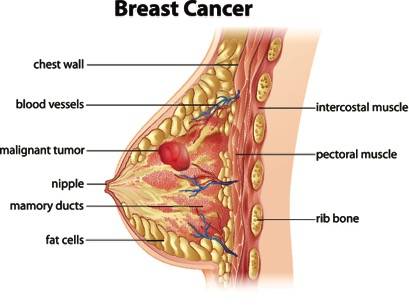
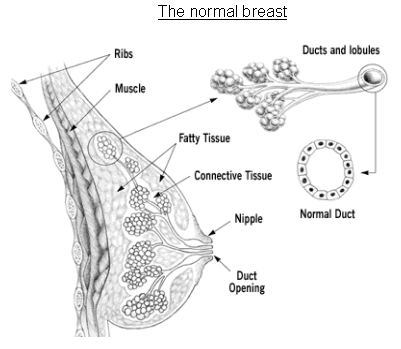
Breasts are composed of fibrous (connective) tissue, fatty tissue and glandular tissue. They lie on a band of strong muscle that sits on the ribs of the chest. Breasts have no useful biological function other than to provide milk for babies.
Fibrous tissue gives the breast its shape and helps to support the fatty tissue and glandular tissue. As women age, the fibrous tissue is replaced with fatty tissue. This leads to changes in the shape and texture of the breasts.
The glandular tissue is made up of a series of lobules. These are small structures that produce milk when stimulated by female hormones during pregnancy. The milk produced in the lobules drains into small channels or ducts that eventually open into the nipple. Glandular tissue also responds to menstrual-related hormonal changes, which can cause the breasts to be occasionally tender and lumpy.
Breast cancer 1
Picture reproduced with the kind permission of the Anti-Cancer Council of Victoria

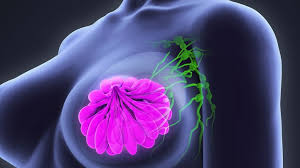
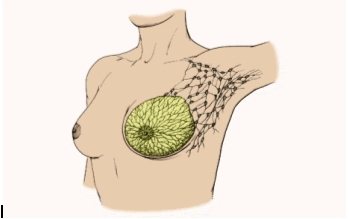
In the breast, armpit and neck there are small glands called lymph nodes, which, along with the lymph vessels into which the nodes drain, are part of the lymphatic system. The role of the fluid filled lymphatic system is to filter infections and prevent them entering the blood stream. Each breast has a network of lymph vessels that drain into a system of about 24 lymph nodes in the armpit. These are called the axillary lymph nodes. There are also lymph nodes behind the breastbone called the internal mammary nodes. Some of these nodes drain into the axillary lymph nodes, with the remainder draining into other nodes in the chest.
 
Axillary lymph nodes
Breast cancer 2

Causes and risk factors

The causes of breast cancer are not known. However, it is known which women are more at risk of developing the condition. The main risk factors for developing breast cancer are:
  • Being a woman over the age of 40 years
  • Having a family history of breast cancer - the younger the family member was when they developed breast cancer, the greater the risk
  • Having had breast cancer previously
  • Having had a biopsy showing an "at risk" breast lump or thickening
  • Having a faulty gene, such as BRCA1 or BRCA2. Women with a BRCA1 gene mutation have a 55-65% risk of developing breast cancer by age 70 years. For women with a BRCA2 gene mutation the risk is approximately 45%.
Other risk factors include:
  • Having had an early onset of periods or the late onset of menopause
  • Having had a first child after the age of 30 years or not having had children at all
  • A diet high in fat, excessive alcohol and a reduced intake of fibre, fruits and vegetables
  • Being on Hormone Replacement Therapy (HRT) medication for longer than 5-7 years
  • Taking the oral contraceptive pill may slightly increase the risk of developing breast cancer, but this has not been conclusively proven
  • Having dense breasts - dense breasts do not increase the risk of developing breast cancer, but they may make lumps difficult to feel and see.

Types of breast cancer

There are several different types of breast cancer. The two most common types are ductal breast cancer (to do with the milk ducts) and lobular breast cancer (to do with the milk lobules). Each of these breast cancers can be either “in situ” (in the same place) or “invasive” (has spread to normal tissue). 
 
In situ carcinoma: These are pre-cancers and are the earliest stage of breast cancer; they can either develop into invasive breast cancer or raise the risk of developing invasive cancer. Caught and treated early, they are often completely curable.
 
Ductal carcinoma in situ (DCIS): This is where the breast cancer cells are completely contained within the milk ducts and have not spread into the surrounding breast tissue. DCIS is usually treated with surgery (mastectomy) or combined surgery (partial mastectomy) and radiotherapy.
 
Lobular carcinoma in situ (LCIS): This is where the breast cancer cells are completely contained within the milk lobules and have not spread into the surrounding breast tissue. Often LCIS does not need treatment. Instead, regular breast exams and mammograms may be used to monitor for the early changes of developing breast cancer.
 
Invasive carcinoma: This is where the ductal or lobular cancer spreads into the surrounding tissues. Approximately 90% of invasive breast cancers are ductal cancers.
 
Other less common breast cancers include inflammatory breast cancer and medullary breast cancer.

Signs and symptoms

Most commonly, the first sign of breast cancer is a new lump in the breast. The lump is usually painless. Other signs of breast cancer include:
  • A new area of thickened tissue in the breast
  • Nipple discharge or a change in the nipple
  • Dimpling or puckering of the skin of the breast
  • A change in breast size or shape.
While these symptoms may not be related to breast cancer, it is important to see a doctor promptly for assessment and accurate diagnosis if any of these symptoms are present. Early detection is vital in the successful treatment of breast cancer.

Diagnosis

If an abnormal lump is found, or other symptoms are present, a referral to a breast specialist for assessment and diagnosis will probably be recommended. In order for an accurate diagnosis to be made the three-step approach of clinical examination, imaging (mammography and ultrasound scanning), and biopsy will be required.
 
Clinical examination:
The doctor will begin by examining both breasts. They will then check the abnormal lump's size and location, and other characteristics such as whether it is mobile, hard or soft, regular or irregular. The doctor will ask about the history of the lump such as how long has it been there, has it grown, is it painful. Risk factors such as family history or previous breast lumps will be discussed.
 
Imaging (mammograms and / or ultrasound scanning):
A mammogram (specialised breast x-ray) shows the soft tissue of the breast and can indicate any suspicious areas. Ultrasound scanning uses sound waves to form an image of the breast tissue. Pictures of any suspicious areas can be taken. Ultrasound scanning is particularly useful for assessing whether a lump is fluid filled or solid.
 
Biopsy:
There are different types of biopsies used to take cells or tissue samples from a suspicious lump so they can be sent to a laboratory for analysis under a microscope.
  • Fine needle aspiration: This is usually the first type of biopsy used. It is performed using a local anaesthetic and involves inserting a fine needle into the lump and removing a small sample of cells and/or fluid. At the laboratory the sample is spread onto a glass slide and analysed. The insertion of the needle may be guided by ultrasound.
  • Core biopsy: This uses a larger needle to remove a sample of tissue from the lump. A local anaesthetic is used and a very small incision (1-2mm) is made in the skin over the lump. The needle is usually guided into the lump by ultrasound. At the laboratory the tissue sample is sliced very finely and placed on a glass slide for analysis.
  • Stereotactic core biopsy: This is a core biopsy performed on a special x-ray table allowing three-dimensional computerised images of the lump to be taken and used to guide the biopsy needle into the lump. This is useful for testing lumps seen on a mammogram that cannot be felt or visualised using an ultrasound scanner.
  • Excision biopsy: This is a minor surgical procedure where part or all of the abnormal area is removed. It can be performed using a local or general anaesthetic. If the lump is unable to be precisely located using mammogram or ultrasound scanning, it may need to be marked by a thin wire called a "hookwire". This is inserted under x-ray guidance using a local anaesthetic just prior to the surgery.
If a diagnosis of breast cancer is made, blood tests, x-rays and scans of the bones and liver may be performed to assess whether the cancer has spread to other organs.

Stages of breast cancer

After diagnosis, breast cancers are assigned a "stage". The stage indicates the tumour's size and how far it has spread within the breast, surrounding tissues or to other organs in the body. Stages range from 0 to IV - a higher stage indicates more severe cancer.
 
Stage 0: The cancer has not spread beyond the ducts of the breast (ie: ductal carcinoma in situ or DCIS).
Stage I: These tumours measure less than two centimetres. The axillary lymph nodes are not affected and there are no signs that the cancer has spread elsewhere in the body.
Stage II: These tumours measure between two and five centimetres, or the axillary lymph nodes are affected, or both. There are no signs that the cancer has spread elsewhere in the body.
Stage III: These tumours are larger than five centimetres, the axillary lymph nodes are usually affected, but there are no signs that there has been any further spread.
Stage IV: These tumours are of any size, but the axillary lymph nodes are usually affected and the cancer has spread to other parts of the body.
 
Breast cancer tumours are also classified as being "hormone receptor positive" or "hormone receptor negative". Approximately 60% of all breast cancer tumours are hormone receptor positive meaning that they rely on oestrogen or progesterone to grow. The hormone receptor status of the tumour will be taken into account when treatment is planned.
 
Another classification given is the HER2 status of the cancer. HER2 stands for “human epidermal growth factor receptor – type 2.” It is a type of protein that is attached to the surface of normal cells and influences the cell’s growth and reproduction. In HER2 positive breast cancers there are an abnormally large number of HER2 proteins on the cancer cells. This can cause the cancer cells to grow and spread at a faster rate. Approximately 20% of all breast cancers are classified as HER2 positive. Women with this type of breast cancer have a poorer prognosis than women who are not HER2 positive.

Treatment

Treatment of breast cancer depends on the type of breast cancer, its size and position, whether it has spread, the woman's age and general health, and the woman's preference. In general, some type of surgery is recommended followed by additional treatments (adjuvant therapies).
 
Surgery and radiotherapy are classed as local treatments (as they affect a localised, specific area) while chemotherapy and hormone therapy are classed as systemic treatments (as they have the potential to affect the whole body).
 
SURGICAL TREATMENT
 
Lumpectomy / partial mastectomy:
In most cases, the breast cancer tumour can be removed without having to remove the entire breast (referred to as breast conserving surgery). The area of the cancer is removed along with a ''margin" of healthy surrounding tissue (usually about 1cm), to ensure that all of the breast cancer is removed.
 
Mastectomy:
This operation involves removing the entire breast and all of the breast tissue from just below the collarbone to the upper abdomen. A "simple mastectomy" is when just breast tissue is removed. A "modified radical mastectomy" is when the lymph glands under the arm are also removed.
 
Mastectomy may be recommended if the tumour is large, there is more than one area of breast cancer in the breast, or for cases of recurrent breast cancer. A hospital stay of 2-5 days and a recovery period of 3-6 weeks can be expected after a mastectomy.
 
Surgical treatment may also involve:
 
Axillary node dissection:
It is usual practice during breast cancer surgery to remove up to half of the axillary lymph nodes for testing. Testing of the lymph nodes can indicate whether the cancer has spread into the lymphatic system, thus increasing the risk of the cancer spreading to the rest of the body. Axillary node dissection is usually well tolerated but there is a risk that the remaining lymph nodes will not be able to adequately cope with the drainage from the lymphatic vessels in the breast. This can lead to shoulder stiffness, changes in sensation in the area, and a condition known as lymphoedema which is marked by arm swelling.
 
Sentinel node biopsy:
This type of lymph node biopsy is used in some cases to minimise problems associated with axillary node dissection. During a sentinel node biopsy two special dyes are injected around the breast cancer tumour. One is visible to the naked eye during the biopsy surgery and the other is a weak radioactive substance detectable by either a Gamma camera or a hand-held device like a Geiger counter. The dyes drain through the lymph vessels and into the first node to be involved - the sentinel node. This node is then removed for analysis. If the sentinel node is clear of cancer cells, then it can safely be presumed that the cancer has not spread to the rest of the axillary nodes. If, however, the sentinel node is positive for cancer cells a subsequent procedure to remove the remaining lymph nodes would be needed.
 
Breast reconstruction:
After mastectomy, some women may choose to have the breast reconstructed. This can be done at the time of the mastectomy or at a later date. The surgery is usually performed by a plastic surgeon. The aim of breast reconstruction is to recreate a breast that feels and looks as natural as possible.
 
The majority of breast reconstructions are performed using muscle and tissue taken from the abdomen in a procedure known as a TRAM flap procedure. Less commonly, muscle and tissue from the back can also be used in a procedure called a Latissimus Dorsi flap. Artificial breast implants can also be used to reconstruct the breast. This is usually done in conjunction with stretching the skin in order to accommodate the implant. With TRAM flap or Latissimus Dorsi flap breast reconstruction a hospital stay of 4-6 days and a recovery period of 4-6 weeks can be expected.
 
Occasionally the healthy breast needs to be made smaller to match the breast that has been reconstructed. This surgery would be performed at the same time as the breast reconstruction.
 
For women who do not wish to have breast reconstruction, an external breast prosthesis can be used. This is a jelly-like breast-shaped mould that fits into a specially fitted bra and comes in a variety of shapes and sizes.  When worn, the appearance is the same as that of a normal breast. Wearing the prosthesis also helps to maintain proper balance and posture. The New Zealand government provides funding of $600 every four years for the prosthesis and bras.
 
NON-SURGICAL TREATMENT
 
Additional treatments are commonly given after surgical removal of a breast cancer. One or a combination of these treatments may be recommended. An oncologist (cancer specialist) will be involved in deciding which treatments will be given.
 
Radiotherapy:
This uses radiation to destroy any cancer cells that may be left in the breast. It is most commonly used after lumpectomy/partial mastectomy. However, it may be used after mastectomy if there was more than one tumour, the tumour was large, or the tumour was growing close to the chest wall. A course of radiotherapy is usually given over4-6 weeks, consisting of daily treatments from Monday to Friday. Side effects of the treatment include severe tiredness and burns similar to bad sunburn on the treated area.
 
Chemotherapy:
This may be given if spread of the cancer is suspected or confirmed and is usually given soon after surgery. Chemotherapy medications can be given by tablet or as injections into the blood stream. Usually it is a combination of both. The medications aim to kill off any cancer cells that may be circulating in the body. There are different strengths and combinations of chemotherapy medications, which are given in cycles. Side effects of chemotherapy treatment may include nausea, hair loss, sores in the mouth and diarrhoea.
 
Hormone therapy:
For cases where the breast cancer is hormone receptor positive, hormone therapy may be prescribed to help prevent recurrence of the breast cancer. These medications work by blocking the hormone receptors on the breast cancer cells, preventing hormones binding to them and stimulating growth. One common example of this type of medication is tamoxifen. This is commonly given for up to five years after diagnosis of breast cancer. Other types of hormone treatments include anastrozole (Arimidex) or letrozole (Letara).
 
Biological therapy:
This type of treatment includes a class of anticancer medications called “monoclonal antibodies”. These medications are formulated to target cancer cells, rather than normal healthy cells. A monoclonal antibody medication used in New Zealand is trastuzumab (Herceptin). This is used to treat women with HER2 positive breast cancer. Trastuzumab works by binding to the HER2 proteins, preventing them from stimulating the cancer cells to grow. It also acts to “flag” the cancer cells to the body, which then stimulates the immune system to destroy the abnormal cells.  In New Zealand, trastuzumab is funded for up to 12 months' use in the treatment of women with HER2 positive breast cancer.

Tuesday, September 11, 2018

What are the Signs and Symptoms of Breast Cancer?

Breast cancer is the most common cancer in women; 1 in 8 women in the U.S. are diagnosed with the disease. Mammograms are effective methods of screening and diagnosing the disease even before symptoms arise, but it is still important to be aware of the signs and symptoms that may indicate cancer.
Some common signs and symptoms of breast cancer include:
  • A mass or lump on the breast
  • Dimpling of the nipple
  • Asymmetry
  • Bumps in the armpits
Inflammatory breast cancer, a rare form of the disease, is often confused with an infection of the breast called mastitis. These signs and symptoms can differ from other breast cancers, and may include:
  • Swelling of the breast
  • Redness of the skin on the breast
  • Breast being warm to the touch
You should see your doctor if you notice any of these symptoms. Frequently, they can be the result of a benign condition, not cancer—but knowing your body and what is normal for you is important.

According to Rachel Freedman, MD, MPH, only 5 to 10 percent of people with breast cancer will have had a genetic predisposition to the disease—meaning that they inherited a gene that significantly increased their likelihood of being diagnosed with breast cancer in their lifetime.

With that said, women who have a first-degree degree relative diagnosed with breast cancer, i.e., a mother or a sister, should discuss this with their doctor. These women may have an increased risk of breast cancer, and might benefit from more frequent screening, or screening beginning at a younger age, explains Freedman.

“Most changes in breasts are not related to cancer,” Freedman says, “but it’s always important to alert health care providers about any changes that you see or feel.”


What Are the Symptoms of Breast Cancer?

Different people have different symptoms of breast cancer. Some people do not have any signs or symptoms at all. A person may find out they have breast cancer after a routine mammogram.
Some warning signs of breast cancer are—
  • New lump in the breast or underarm (armpit).
  • Thickening or swelling of part of the breast.
  • Irritation or dimpling of breast skin.
  • Redness or flaky skin in the nipple area or the breast.
  • Pulling in of the nipple or pain in the nipple area.
  • Nipple discharge other than breast milk, including blood.
  • Any change in the size or the shape of the breast.
  • Pain in any area of the breast.
Keep in mind that these symptoms can happen with other conditions that are not cancer.
If you have any signs or symptoms that worry you, be sure to see your doctor right away.

What Is a Normal Breast?

No breast is typical. What is normal for you may not be normal for another woman. Most women say their breasts feel lumpy or uneven. The way your breasts look and feel can be affected by getting your period, having children, losing or gaining weight, and taking certain medications. Breasts also tend to change as you age. For more information, see the National Cancer Institute’s Breast Changes and Conditions.

What Do Lumps in My Breast Mean?

Many conditions can cause lumps in the breast, including cancer. But most breast lumps are caused by other medical conditions. The two most common causes of breast lumps are fibrocystic breast condition and cysts. Fibrocystic condition causes noncancerous changes in the breast that can make them lumpy, tender, and sore. Cysts are small fluid-filled sacs that can develop in the breast.

Signs and symptoms of breast cancer

Some of the signs and symptoms of breast cancer include:
  • a lump in the breast
  • a change in the size or shape of the breast
  • dimpling of the skin or thickening in the breast tissue
  • a nipple that’s turned in (inverted)
  • a rash (like eczema) on the nipple
  • discharge from the nipple
  • swelling or a lump in the armpit
  • pain or discomfort in the breast that doesn’t go away.
A lump in the breast is the most common symptom of breast cancer.
Most breast lumps are not cancer. They are usually fluid-filled lumps (cysts) or a fibroadenoma, made up of fibrous and glandular tissue.

But it is important to get anything that is unusual for you checked by your GP. The earlier breast cancer is treated, the more successful treatment is likely to be.